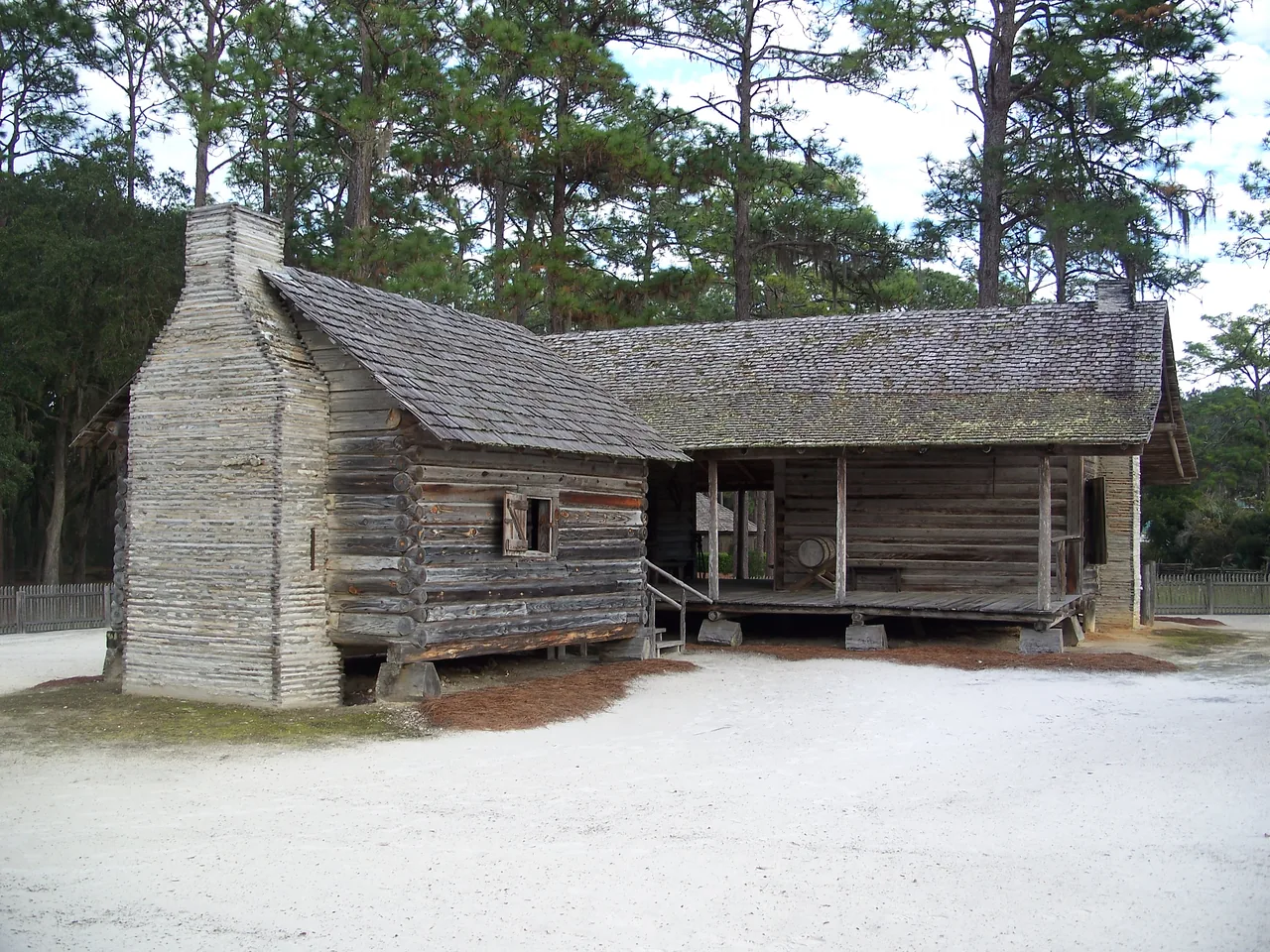
Stand in a backyard out here, one of the big ones around Windermere where the lot runs half an acre or better, and you are standing on what used to be the most useful ground a family had. Not the front. The back. For most of the time people have lived west of Orlando, the buildings that mattered sat out here behind the house, and the first of them was the one where supper got cooked.
That part trips people up. The kitchen wasn’t in the house. It was its own little building, ten or fifteen steps off the back porch, standing alone in the yard.
So here is the question this old ground answers, if you let it. Why on earth would anyone drag the kitchen outside, away from the house, and make somebody carry every hot meal across the yard?
Grove country, and a lot of room

Picture what this corner of Orange County actually was. High sandy ridge, lake after lake, and orange trees running to the treeline in every direction. A family that came here to grow citrus got one thing in abundance and almost nothing else: room. Miles of it, and no store, no power line, no help within shouting distance.
So a homestead had to be its own small town. Everything a household needed, it had to make or keep or grow on that ground. And a ground with that much room let you spread the work out into as many buildings as the work required.
Why the kitchen moved outside

Two reasons, and they are both easy to feel if you have spent a July here.
The first is heat. Cooking meant a wood fire going most of the day, in a room with no way to cool it. Put that fire inside the house in a Central Florida summer and you have turned the whole place into an oven you cannot leave. Put it in a separate building and the heat stays out there with it.
The second is fire itself. A stray spark in a wood kitchen could take the building in minutes. If the kitchen was its own structure, a kitchen fire cost you a kitchen. If it was part of the house, it cost you the house. So the smart move was to stand it off by itself, sometimes joined to the back porch by a little covered walk, and carry the food across.
A kitchen fire should cost you a kitchen, not a home. So the kitchen stood in the yard.
The rest of the yard earned its keep too
Once you see the kitchen out there, you start seeing the whole backyard the way they did. It wasn’t grass. It was a working yard, and nearly every building in it did a job the family could not live without.

There was a smokehouse, because this was long before a refrigerator, and the way you kept a hog through the year was to salt it and smoke it in a little shed built for exactly that. There was a corn crib for the feed, and a barn for the animals, and a well, and a bell on a post you could ring to call people in from the grove or to raise an alarm.

Off in a corner stood a cane grinder and an iron kettle. You grew your own sugar cane, a mule walked in slow circles to crush it, and you boiled the juice down to a year’s worth of syrup. A grape arbor around the side gave you jelly, preserves, and a little wine. None of it was a hobby. It was how a place this far out stayed fed.

And the grove needed hands

There was one more reason to build out back, and it is the one that ties this straight to the groves. Citrus needs people at picking time, more people than any one family has. The hands who climbed the ladders and loaded the baskets had to live somewhere, and often enough that somewhere was a small cabin set out behind the main house.
So the second building in the yard might be a kitchen, or a bunk for a grove hand, or a room for a grown son, or a place for an older parent to keep their own door. The need changed. The habit did not. If you had the room, you built what the year required, and you built it out back.
The thing that emptied the yard

Then, over about one lifetime, the reasons went away one at a time.
First came the window screen, which sounds like nothing and changed everything. Before it, you slept under a net and kept the house shut against the bugs. After it, you could finally throw the windows open and let a Florida house breathe. Then the power lines reached out this far, and a bulb replaced the lamp. Then, last, the window air conditioner.
And once you could light and cool the inside of the main house, the reasons for the hot little building in the yard simply dissolved. The kitchen came indoors, where the cool was. The icebox, and then the refrigerator, retired the smokehouse. You could buy syrup, so the kettle went cold. One by one the outbuildings emptied, leaned, and came down, until the backyard was just a backyard.
What stayed behind
Here is the part that matters for anyone living out here now. The buildings went, but the room stayed.
Windermere and the old rural pockets around it, Gotha just to the east, the lanes off toward Winter Garden, held onto the one thing the groves were laid out on: generous ground. The town fought to keep its big lots and even its sand roads on purpose. So the yards out here are still the deep, wide, half-acre-and-up kind that a homestead needed, long after the homesteads themselves became lawns.
A few of the old compounds even survived whole, kept as they were, kitchen and smokehouse and all, so you can still walk a yard that was built in pieces and see how plainly it made sense. The habit never really died. It just spent a few decades without a building to live in.
Which is the quiet point of the whole thing. The second building out back was never a luxury, and it was never a trend. It was the most ordinary idea this land ever had. If you had the room, you built what your family needed on it, and you put it behind the house.

